
Contemporary witnesses
- Missionary correspondence
- The Hwang Sayŏng paeksŏ
- Interrogation records
- Court and administrative records
Sources created near the events are read according to their own moments and evidentiary purposes.
Research Project Article Manuscript
Han Yŏngik between Narrative Construction and the Genealogical Record
What happens when a historical person survives in the record, but not in the role tradition assigned him?
This article reexamines the identification of Han Yŏngik as the figure who exposed Zhou Wenmo in 1795. It compares the demands placed upon Han by later narrative traditions with the person recoverable from genealogical, administrative, missionary, and autobiographical records.
Rather than beginning with a harmonized account, the paper separates surviving witnesses, reconstructs the documentable Han, and traces how later historical writing assembled increasingly specific claims around his name.
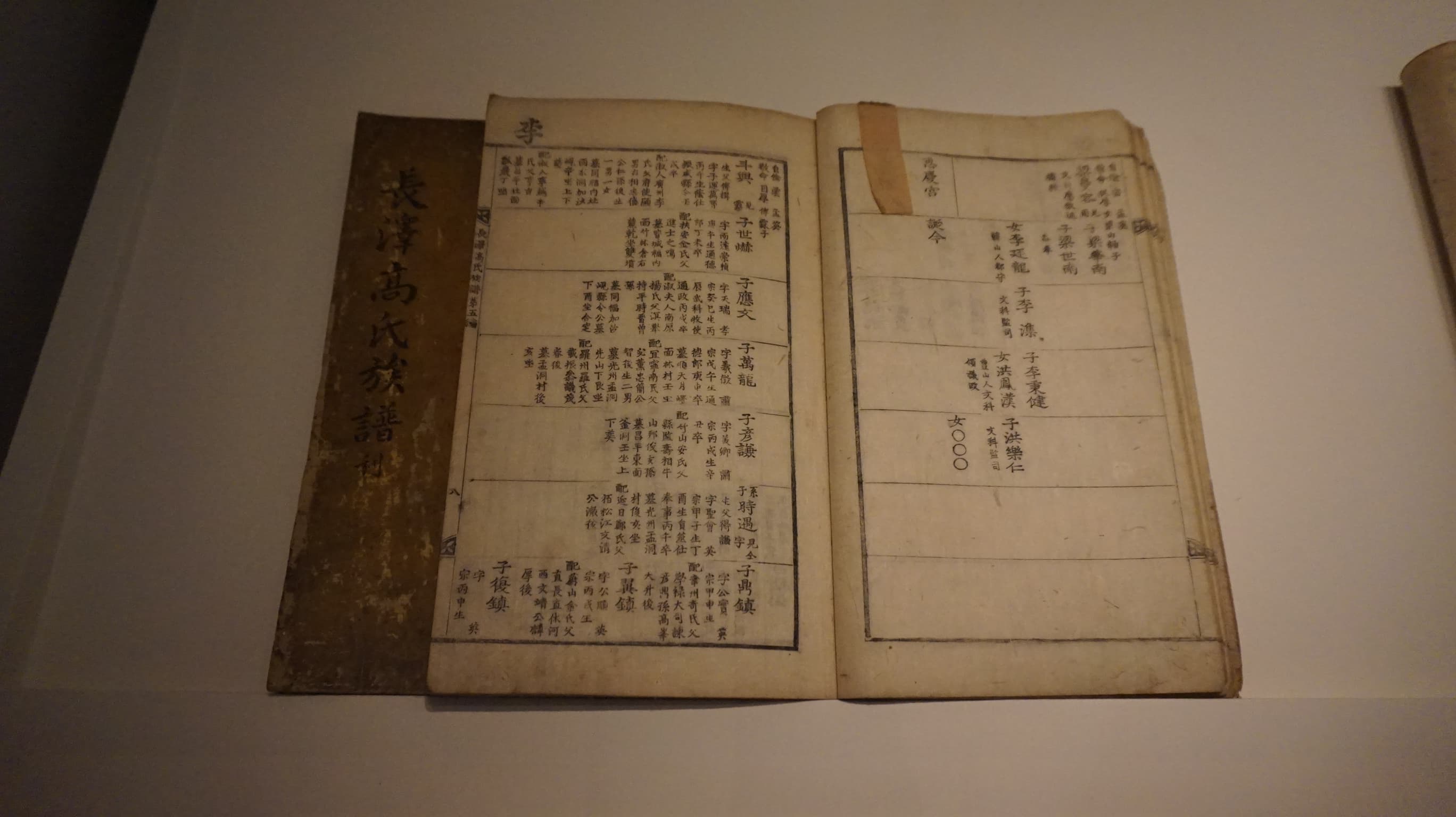
A late Chosŏn genealogical register. Genealogies encode descent, marriage, adoption, and generational position as documentary structures—not merely as lists of names. The article verifies relevant relationships bilaterally across separate family records.
Representative image; not a genealogy cited as evidence in the article.
Photograph by Jocelyndurrey, via Wikimedia Commons. CC BY-SA 4.0.
The most consequential named individual in the received account is also one of its least independently reconstructed.
Modern accounts of the 1795 Ŭlmyo Incident commonly identify Han Yŏngik as the figure whose information passed through Yi Sŏk and Ch’ae Chegong to the throne, precipitating the attempted arrest of Zhou Wenmo. Yet Han remains one of the least independently examined people in the received account.
The paper asks how that identification was formed, what each surviving witness actually attests, and whether the person required by the narrative can be reconciled with the Han Yŏngik preserved elsewhere in the record.
The article proceeds from the demands of the inherited narrative to the person recoverable from records, and finally to the history of the narrative’s transmission.
What must Han Yŏngik be for each version of the received story to work?
The paper begins by separating surviving accounts rather than treating them as incomplete versions of one unified tradition. Each witness is read first for the person and sequence it independently requires.
What person can be recovered from genealogical, administrative, examination, and family records?
The article reconstructs Han independently of the role assigned to him, testing descent, marriage, education, social position, and documented relationships across multiple record systems.
How did separate claims become assembled, expanded, and cited as a single historical account?
The final movement follows the narrative through nineteenth- and twentieth-century historical writing, asking how inherited claims acquired greater biographical specificity and bibliographic authority.
Later narratives frequently acquire authority by being read together. The paper first restores the differences between them.
Genealogical, examination, marriage, and administrative materials establish a historical person independent of his inherited narrative role.
The article distinguishes relationships asserted by later narratives from those independently supported across family and administrative records.
The final section follows the movement of the story through nineteenth- and twentieth-century historical writing.
The project reconstructs Han across sources created at different moments, for different institutions, and under different evidentiary conventions.
Sources created near the events are read according to their own moments and evidentiary purposes.
Relationships are checked across records preserved by both sides of a marriage or descent claim.
These texts are read as situated acts of recollection and self-presentation rather than transparent containers of memory.
The project follows not only claims, but the citations through which those claims acquired authority.
The article combines bilateral genealogical verification with close comparison of witnesses produced at different moments and for different purposes. Rather than asking whether a source is simply reliable or unreliable, it separates what each sentence directly attests from the larger narrative created when later readers connect those sentences.
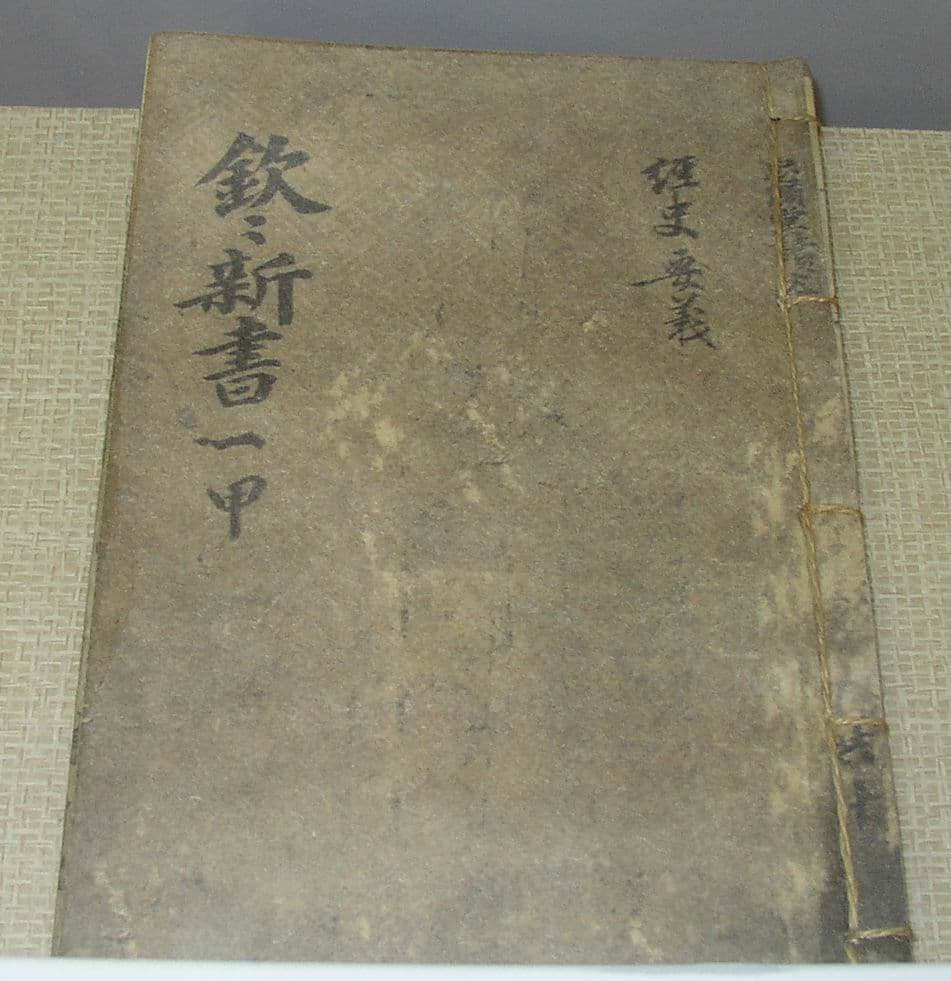
Hŭmhŭm sinsŏ 欽欽新書. Tasan’s work on penal administration. The article examines a different part of his corpus: autobiographical and commemorative writing.
The image situates the project within the broader legal and documentary world of Tasan’s scholarship.
Photograph by Seonjong Park, via Nichetas and Wikimedia Commons. CC BY-SA 3.0.
Tasan’s writing occupies more than one documentary register: legal analysis, autobiographical recollection, family chronology, epitaph, and memorial defense. This article focuses on the relationship between autobiographical and commemorative writing, asking how narrative purpose shapes what a text preserves and how later readers join its claims.
The problem is not whether Han Yŏngik existed or stood near the relevant social world. It is whether the surviving evidence identifies him with the act later assigned to him.
By reconstructing the person before evaluating the inherited narrative, the paper avoids treating later biographical detail as evidence for the event it was written to explain.
.jpg&w=3840&q=75)
Claude-Charles Dallet in the bibliographic record. His 1874 synthesis became an influential point of transmission between nineteenth-century Catholic historiography and modern scholarship.
Bibliothèque nationale de France, département Société de Géographie, SG PORTRAIT-1669 (2/2), via Wikimedia Commons. Public domain.
From historical writing to bibliographic authority
The received narrative did not pass unchanged from witness to witness. It was selected, expanded, summarized, and re-anchored through successive acts of historical writing.
The article traces that movement across nineteenth-century Catholic historiography and later scholarship, attending to the relationship between growing narrative specificity and inherited citation authority.
This article is currently in the publication process. The manuscript is not available for public download.
Scholars working on late Chosŏn Catholic history, genealogical method, witness comparison, or nineteenth-century historiography are welcome to contact me regarding the project.
Contact the author
.jpg)